11 · Projects
French Gendarmerie (CGI)
French Gendarmerie – Mobile ergonomic charter
The request
On their NEOGEND smartphones, gendarmes used several business apps designed separately: searching for people, vehicles and objects, messaging, mapping. Each had its own navigation and input rules. The request: a shared ergonomic and visual charter.
The solution
I combined an expert review, a survey of gendarmes in Lille and a benchmark, then tested the rules by redesigning a person-search app. The result: a 29-page charter built on atomic design, with the main commands within thumb's reach, day and night modes and measurable rules, reusable by every development team.
The field first
A gendarme carries out between 10 and 30 checks a day with the device, often one-handed, because they are doing something else at the same time. The approach combined an expert review of the existing apps, a survey of gendarmes in Lille who already used the devices, and a benchmark of interfaces with similar interactions.
The most frequent commands move to the bottom of the screen, within thumb's reach.
A reference app
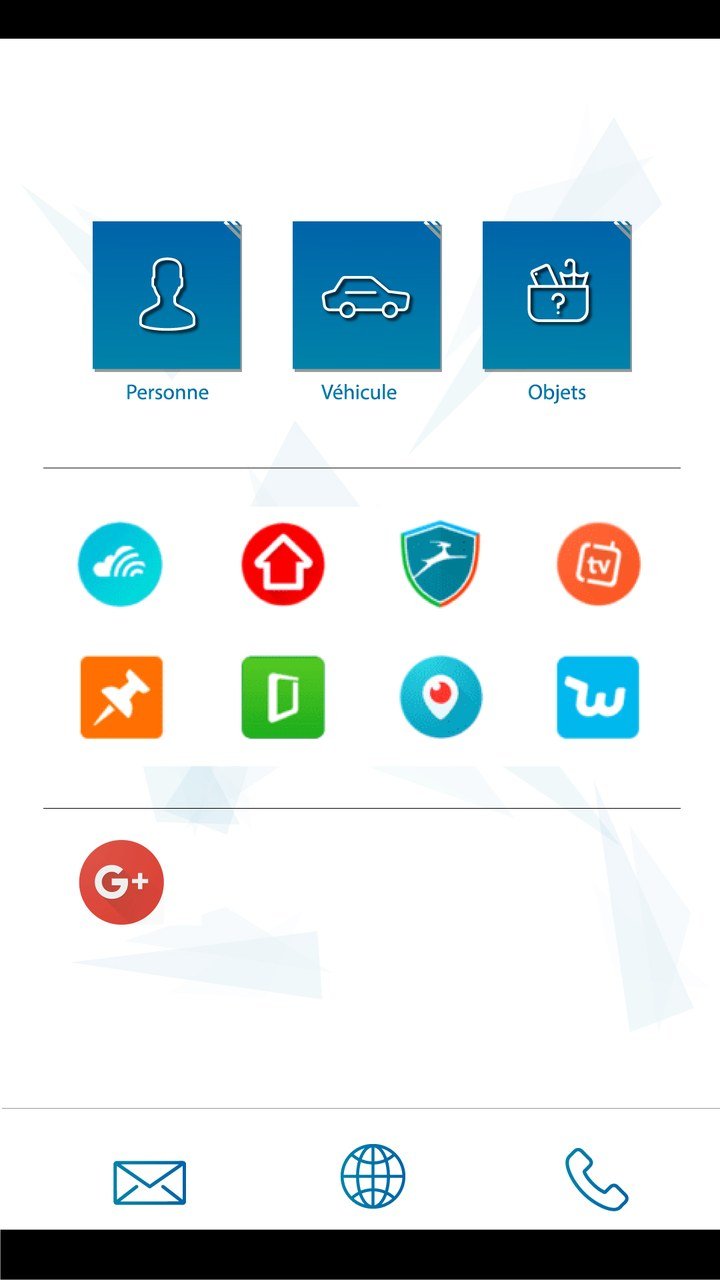
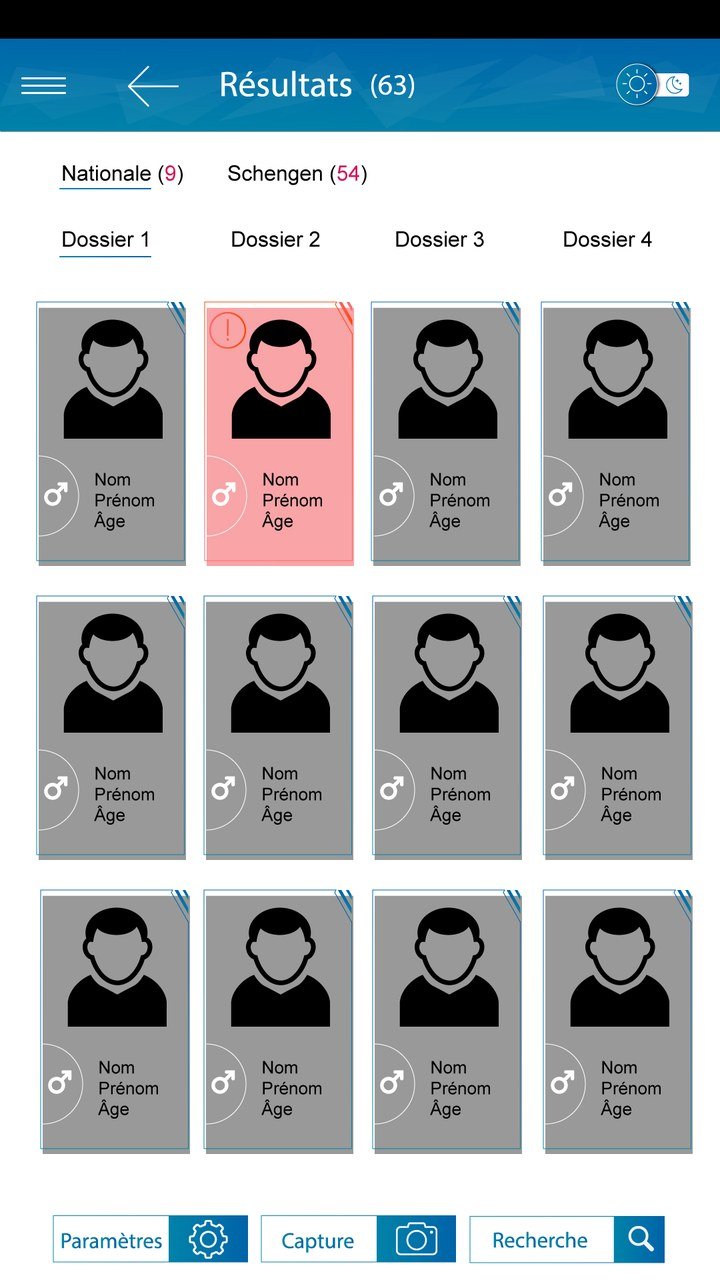
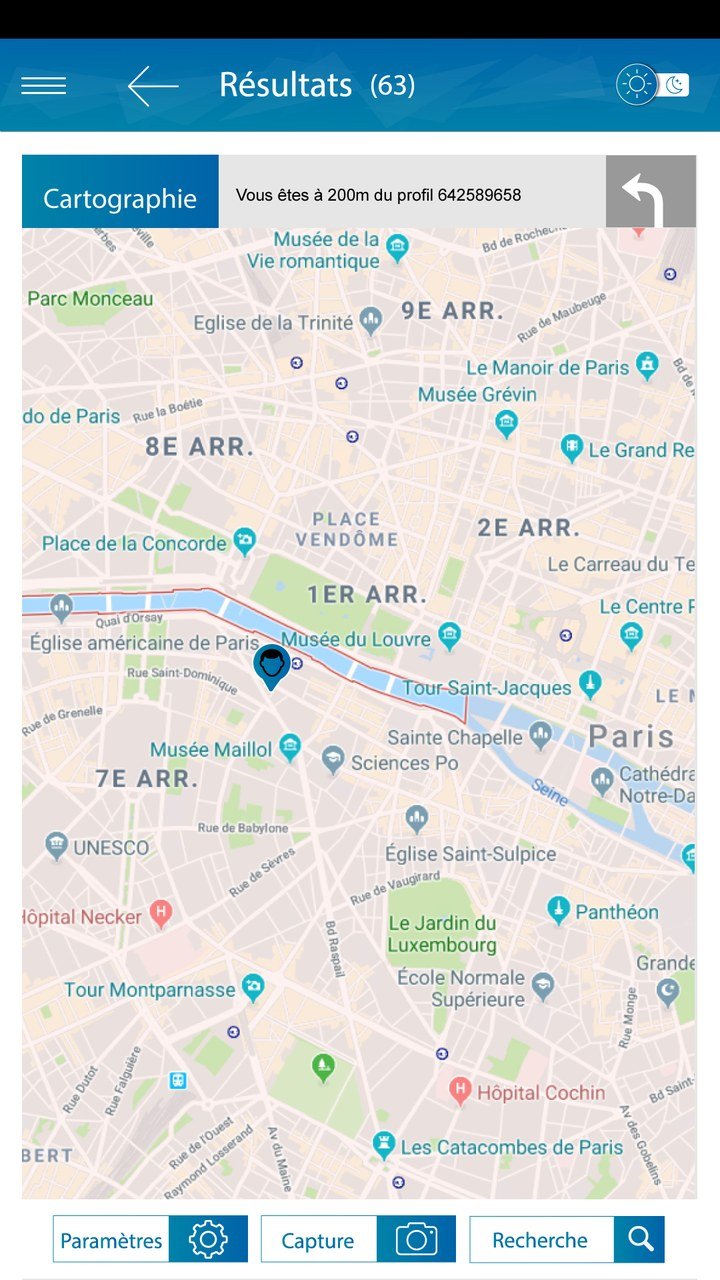
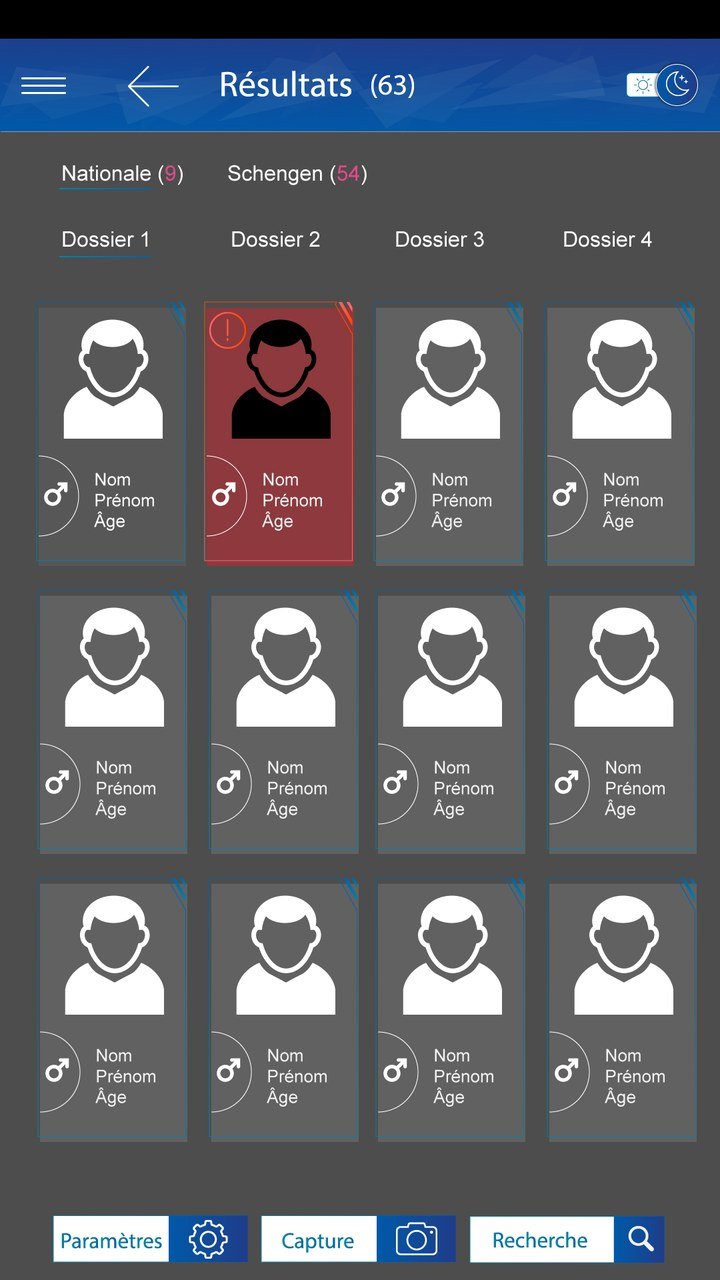
A person-search app served as the reference case: redesigning it tested the rules on a real app before writing them down. Main action bar at the bottom for one-handed use, a title that tells you where you are, a back arrow to the level above, results in tabs per database consulted, flags visible right on the thumbnail.

Day and night
Checks also happen at night. Every template comes in a day mode and a night mode, with inverted contrast and brightness, switched from the header.
Day
Night

Day
Night
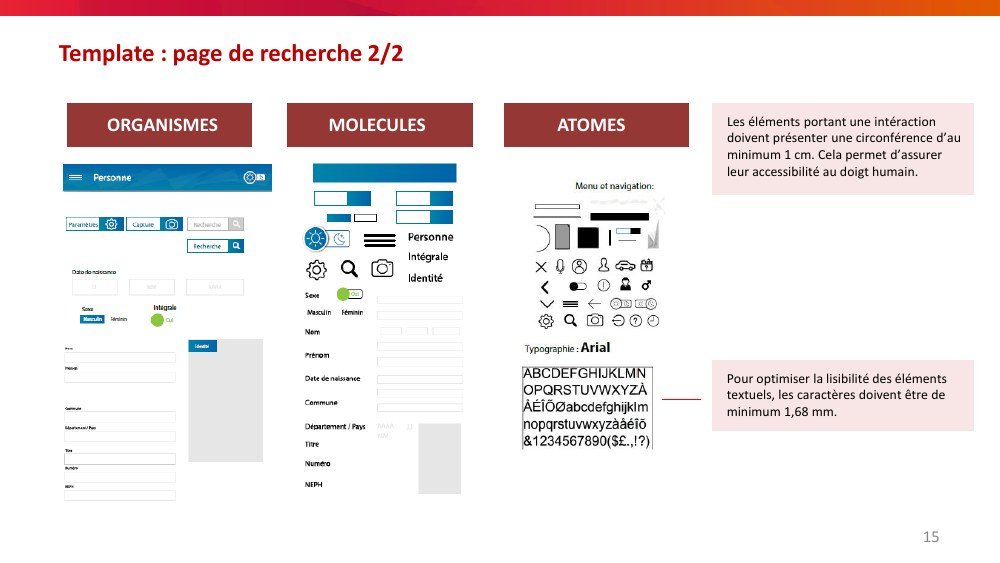
A charter built on atomic design
The charter breaks each template down into organisms, molecules and atoms, with an ergonomic rationale at every level, so it works as a toolbox. It also sets measurable rules: touch targets of at least 1 cm, characters of at least 1.68 mm, margins and type sizes detailed for the device's resolution.