06 — Projects
Chelo
Chelo — the site of a brand that doesn't sell on it
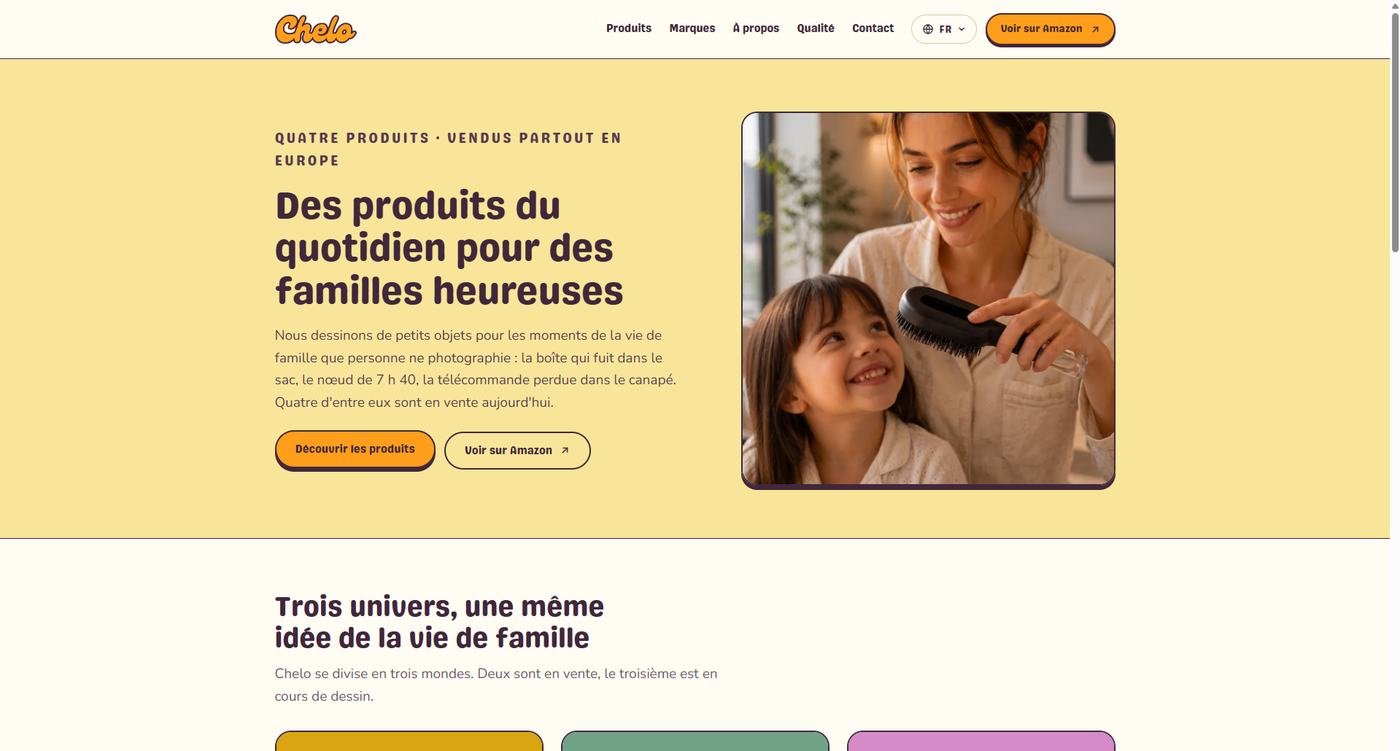
Chelo sells four everyday objects on a marketplace, across four European countries. The brief wasn't “how do we sell more from the site” but a more uncomfortable question: what is a website for, when the selling happens somewhere else?
Analysis
The messages the brand was already receiving said what visitors came for, and it wasn't a shopping cart. Two needs came back repeatedly, and only one of them is about commerce.
- Before buying — knowing who you're dealing with. On a marketplace the seller is one line of text. An unknown brand has to prove there is a real company behind it, or the doubt resolves in favour of the incumbent.
- After buying — finding an order. The most frequent request by far, and precisely the one the site cannot handle: the order doesn't live there.
Design
Three worlds — Food, Home, Fun — act as the navigational spine. The third hasn't launched: it is announced as being drawn rather than hidden. The visitor reads a brand trajectory, not a catalogue of four references.
Five languages, one URL per language, a persistent selector in the header. They follow the countries where the brand actually sells — not a traffic ambition. One language more than markets would be a promise after-sales cannot keep.
Redirect before you reply
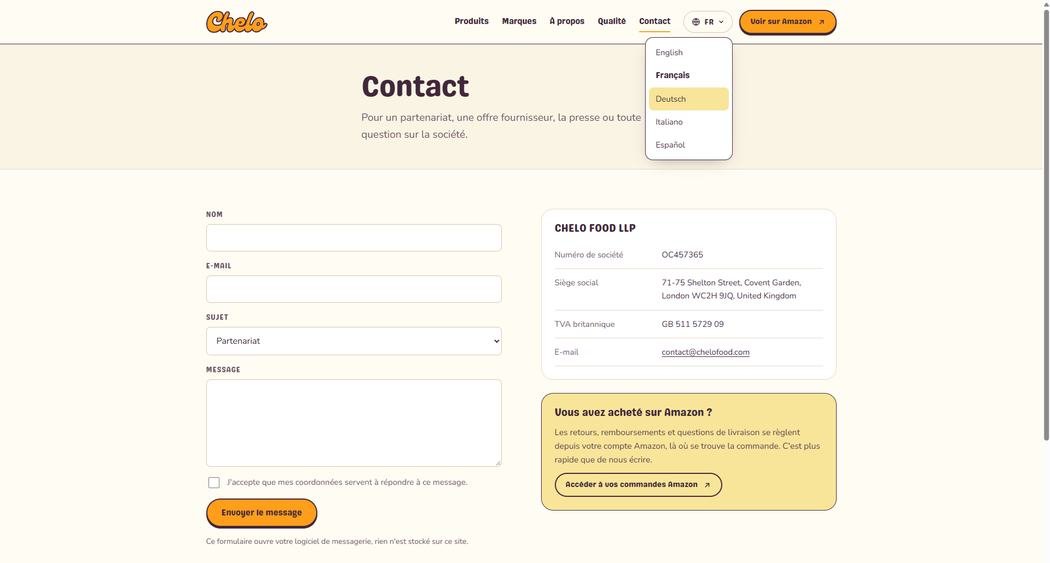
The contact page receives three requests with nothing in common: a partnership, a question about the company, an order problem. The third is the most frequent and the only one the site can do nothing about. So it is handled before the form, not after.
- A redirect box at the top of the column sends the buyer back to their marketplace account, where the order actually exists. The user is served faster than by writing, and the inbox doesn't fill with requests that have no possible answer.
- The company identity block — registration number, registered office, VAT number — sits opposite the form rather than being relegated to the legal notice. It is what separates “dubious shop” from “identifiable company”.
- The form sends nothing to a server: it opens the visitor's mail client. No database, no collection, no processing to declare.
Evaluation & iteration
The production constraint was set in advance: static site, existing hosting, unchanged address. No dynamic component was negotiable — which framed every interface decision far more usefully than a specification document. The design system had to hold five languages across three worlds: every component was tested against German first, the language that breaks layouts before any other.
A site that doesn't sell can still be a good site: it only has to do what the marketplace cannot — say who is behind the product.